-
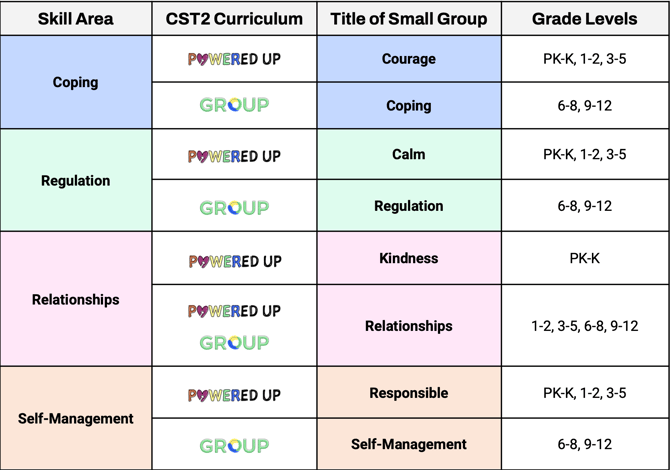
Coping (Internalizing): For students to gain courage and coping skills to manage stress, anxiety or sadness.
Matching Information:- Student has difficulty managing anxiety and sadness.
- Student lacks coping skills to manage internalizing thoughts and feelings.
- Student often withdraws, avoids, worries, or gets irritable when anxious.
-
Regulation (Externalizing): For students to increase calm emotions and gain regulation skills for when they are angry or frustrated.
Matching Information:- Student has difficulty managing emotions.
- Student aggressively acts towards others in ways that hurt or harm relationships such as yelling, hitting, or having outbursts when upset.
-
Relationships (Social Skills): For students to increase their kindness towards others, connection with peers, conversation skills, and conflict resolution skills.
Matching Information:- Student struggles with friendships and connecting with peers.
- Student has difficulty communicating effectively or having conversations with others.
- Student has difficulty following social rules and gets into conflict with others.
-
Self-Management (Executive Functioning): For students to improve their responsibility in managing their time and tasks, and improve executive functioning, with limited support from others.
Matching Information:- Student struggles to manage their time, tasks, and things/personal belongings.
- Student is often disorganized or forgetful.
- Student gets off-task easily and requires support to complete tasks.
- Student cannot manage responsibilities independently and requires significant support from adults.
Need Help?
If you need any additional account support:
- Email our Support Team at support@characterstrong.com
- Connect with your Customer Success Manager for personalized guidance
Don't know who your Custom Success Manager is? Reach out to support@characterstrong.com